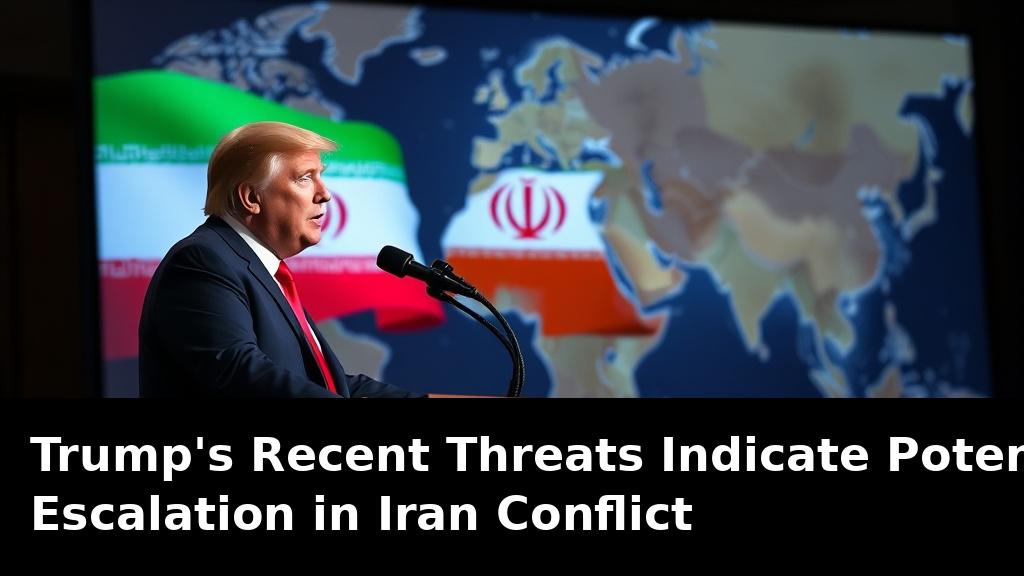
President Trump faces a pivotal juncture in the ongoing conflict with Iran, where previous demands for unconditional surrender have not materialized. His latest statements underscore a readiness to intensify pressure, potentially altering the trajectory of diplomatic and military engagements.
The situation has evolved from initial expectations of swift resolution into a prolonged standoff. Analysts observe that the absence of capitulation from Iranian leadership has prompted a reevaluation of tactics at the highest levels of the U.S. administration.
Background on the conflict reveals roots in longstanding tensions over nuclear ambitions and regional influence. Since the withdrawal from the Joint Comprehensive Plan of Action in 2018, successive administrations have navigated sanctions and indirect confrontations, setting the stage for current developments.
One key analysis point involves the broader implications for international alliances. European partners have expressed concerns over unilateral escalation, which could strain NATO cohesion and affect coordinated responses to Middle Eastern instability. This dynamic introduces uncertainty into multilateral forums where technology transfer agreements and defense collaborations are routinely discussed.
Additionally, the potential disruption to global supply chains merits attention. Heightened conflict risks volatility in energy transportation routes, indirectly influencing sectors reliant on stable access to rare earth materials and semiconductor components sourced from affected regions. Such factors could accelerate shifts toward diversified sourcing strategies among technology manufacturers worldwide.
As statements from the White House continue to signal firmness, observers note the delicate balance between deterrence and the risk of miscalculation. The path forward remains contingent on responses from Tehran and the reactions of other global powers monitoring the exchange.
Formal assessments indicate that any further moves will require careful calibration to avoid unintended consequences across economic and security domains. The emphasis on measured advancement reflects an awareness of interconnected global systems.