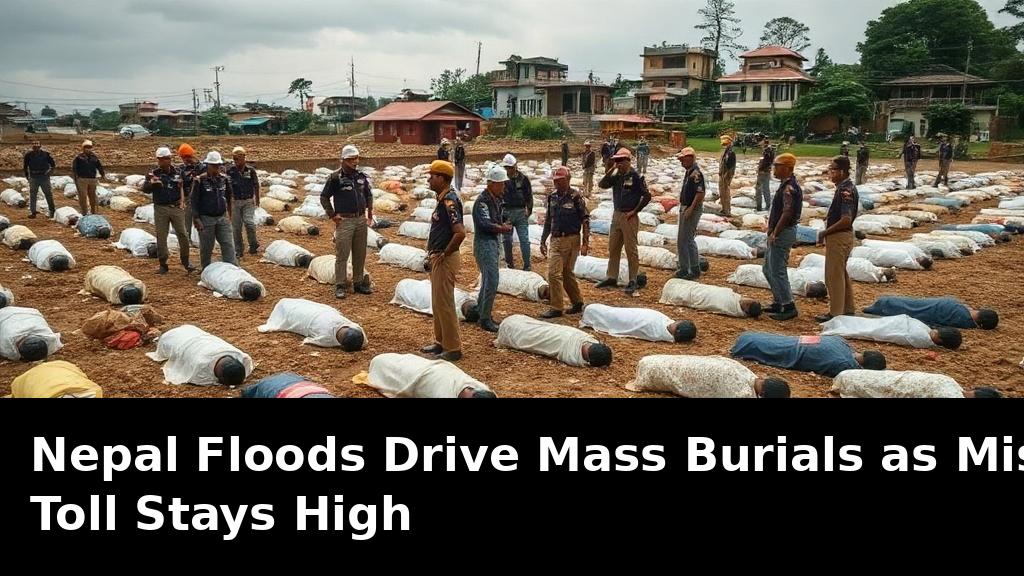
Nepal is facing a severe humanitarian challenge following extensive floods that have left more than 2,500 people missing. Authorities have begun mass burials for recovered bodies, yet only a small portion of the missing have been accounted for among the deceased. This situation indicates that the overall death toll is expected to increase over the coming days as recovery operations continue.
The scale of the disaster has overwhelmed local resources, forcing officials to adopt mass burial procedures to manage the volume of remains. Rescue teams are working in difficult terrain where access remains limited due to ongoing flood effects and damaged infrastructure. Families of the missing continue to search for information, adding pressure on government agencies to accelerate identification processes.
One key aspect of the crisis involves the geographic vulnerability of Nepal’s river basins, where seasonal monsoon patterns frequently lead to sudden water surges that affect densely populated lowland areas. Historical records show repeated flooding events in similar regions, underscoring the need for improved preparedness measures that incorporate better mapping and monitoring tools.
Another consideration is the strain on public health systems, as unrecovered bodies in remote locations raise concerns about sanitation and disease spread in affected communities. Local authorities are coordinating with international aid groups to deploy additional personnel and equipment for body recovery and identification.
Recovery efforts are further complicated by the remote nature of many impacted villages, where communication lines have been disrupted. This delays the flow of accurate data on casualties and missing persons, making it harder to provide timely support to survivors. The emphasis remains on systematic search operations to locate and identify as many individuals as possible before further environmental factors intervene.
As operations progress, the focus stays on balancing respectful handling of the deceased with the urgent need to support living victims who have lost homes and livelihoods. The current approach reflects the difficult realities of managing large-scale natural disasters in challenging landscapes.