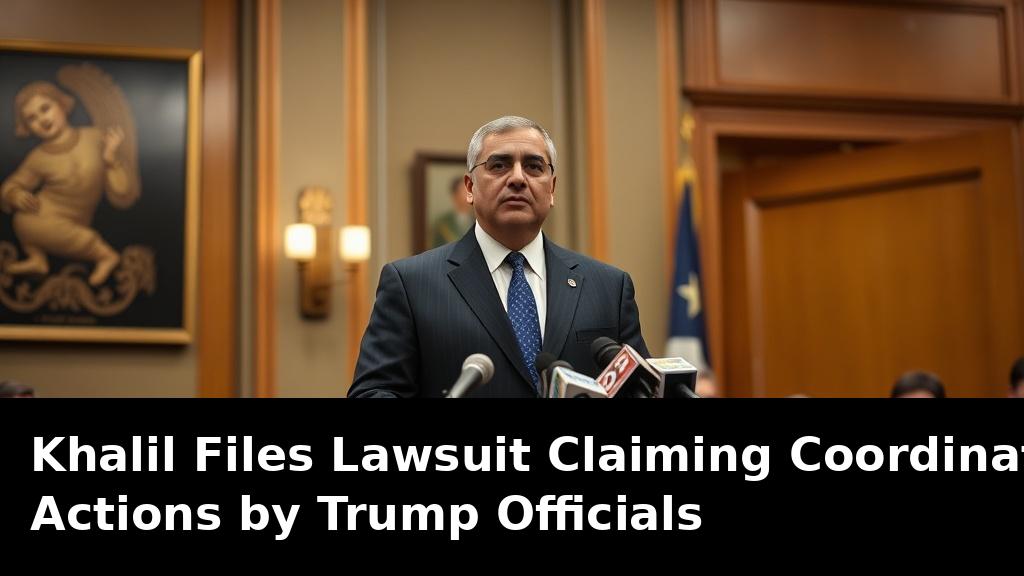
Mahmoud Khalil has initiated legal proceedings alleging that officials associated with the Trump administration engaged in coordinated efforts targeting him and fellow pro-Palestinian activists. The complaint centers on claims that multiple defendants worked together to implement measures against these individuals.
The case now moves to a judicial review phase where Khalil must demonstrate evidence of such coordination. This requirement forms a central element of conspiracy claims under applicable legal standards, demanding proof of agreement and joint action rather than independent decisions.
Legal observers note that establishing coordination in such matters often involves examination of communications, timing of decisions, and patterns across agencies. Courts typically assess whether actions reflect a shared objective supported by documentation or testimony.
The proceedings occur amid ongoing debates regarding protest activities and governmental responses. Khalil’s filing seeks to address perceived overreach through civil litigation, focusing on procedural aspects of how decisions were reached.
Background on similar past cases shows that conspiracy allegations against public officials require substantial evidentiary thresholds. Plaintiffs must link individual actions into a unified effort, a process that can extend over months of discovery.
One relevant context involves the broader application of civil conspiracy doctrines in activist-related disputes, where outcomes influence how future claims are structured. Another point concerns potential effects on organizational strategies for advocacy groups monitoring administrative conduct, as rulings may clarify standards for proving inter-agency alignment.
The judge’s evaluation will determine whether the case advances, with emphasis on factual specificity rather than general assertions. This stage underscores the distinction between alleging coordination and substantiating it through admissible evidence.
Should the matter proceed, it may set parameters for handling comparable allegations involving multiple government actors. The focus remains on judicial scrutiny of the coordination element as outlined in the initial summary.