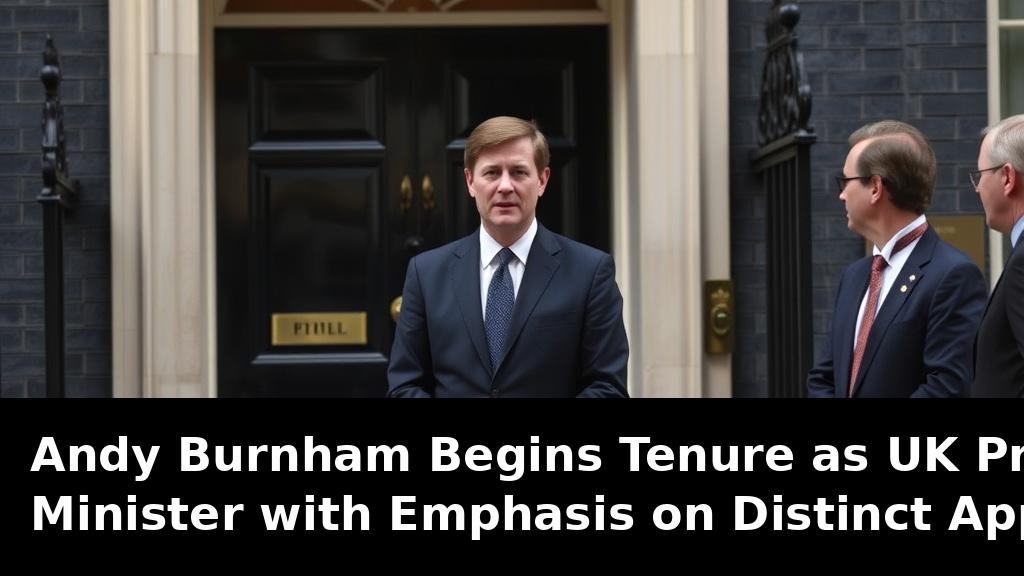
Andy Burnham took office as Britain’s Prime Minister on Monday, becoming the country’s seventh leader in ten years. From the outset, he signaled an intention to differentiate his administration from those that preceded it.
The rapid succession of prime ministers has created a period of notable political flux in the United Kingdom. Burnham’s first public actions focused on establishing clear procedural differences in how decisions would be communicated and implemented.
Observers noted that the new leader prioritized structured briefings and direct engagement with civil service departments. This approach aims to reduce the policy reversals that characterized recent years.
One relevant context is the cumulative effect of leadership turnover on institutional memory within government. Successive changes have shortened the average tenure of key ministerial posts, limiting the time available for long-term planning across departments.
A second point of analysis concerns the relationship between political stability and external investment decisions. Markets and international partners often monitor leadership continuity when assessing regulatory predictability over multi-year horizons.
Burnham’s opening day included meetings with senior officials to review existing commitments. These sessions were described as methodical, with an emphasis on documenting current positions before any adjustments.
The pattern of frequent leadership changes has also affected parliamentary scheduling, requiring repeated adjustments to legislative calendars. Burnham indicated that his team would seek to stabilize these timelines where possible.
Public statements from the new administration stressed continuity in core administrative functions while introducing revised communication protocols. This balance reflects an awareness of both immediate operational needs and longer-term governance objectives.