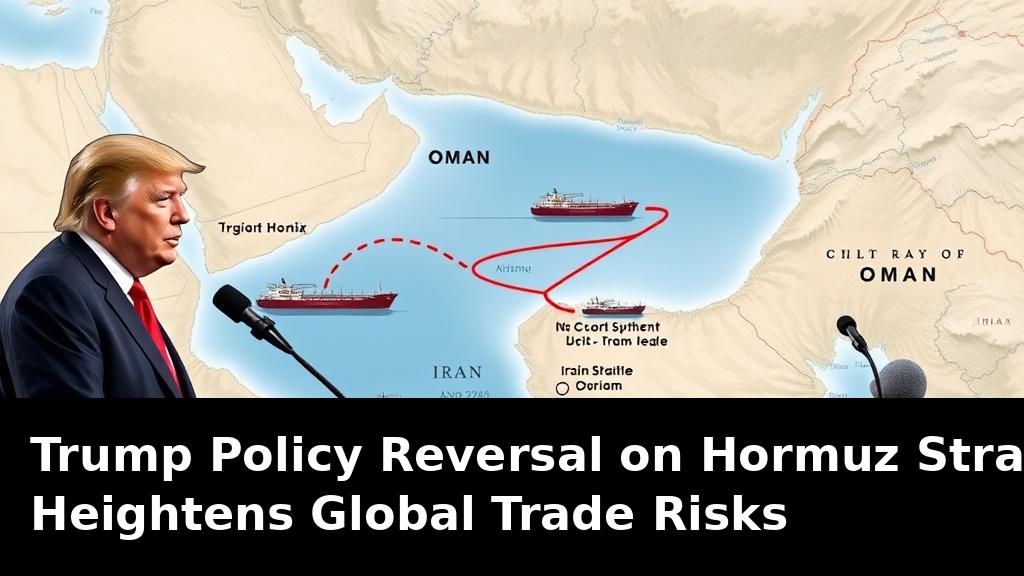
The recent shift in the United States administration’s approach to securing the Strait of Hormuz has introduced fresh uncertainties into international maritime trade. Previously committed to ensuring free navigation through the vital waterway, the president now conditions continued protection on substantial investment commitments from Gulf nations into American projects. This conditional stance marks a departure from longstanding policy and raises questions about the reliability of established security arrangements.
Shipping industry analysts have expressed concern that such linkage between military protection and economic concessions could set a precedent. Other countries controlling critical passages might adopt similar demands, complicating routine transit for commercial vessels. The Strait of Hormuz remains a primary route for oil and liquefied natural gas shipments, making any disruption immediately felt across energy markets.
One key context is the historical reliance of global energy infrastructure on stable passage through this chokepoint. Any perceived weakening of security guarantees can prompt importers to accelerate diversification of supply routes, including greater use of pipelines and alternative terminals. Such adjustments, while gradual, affect long-term planning for refineries and power generation facilities that support downstream manufacturing sectors.
A second consideration involves the potential ripple effects on investor sentiment in energy-related technology development. Projects involving advanced extraction techniques, storage systems, and transport logistics depend on predictable operating costs. When policy signals introduce variability, financing for these innovations may face delays as stakeholders reassess risk exposure.
The administration’s position also invites scrutiny regarding enforcement mechanisms. If protection becomes negotiable, operators of large tankers and container ships may need to incorporate additional insurance provisions or rerouting options into their operational models. These measures add layers of complexity to already tight scheduling windows used by just-in-time delivery networks.
Regional actors in the Gulf have yet to issue formal responses, but preliminary diplomatic exchanges suggest mixed reactions. Some governments view the request for investment as an opportunity to strengthen bilateral ties, while others see it as an unwelcome politicization of shared maritime security responsibilities. The outcome of these discussions will likely influence future negotiations over similar strategic waterways.
Overall, the change underscores how executive decisions on trade route protection can intersect with broader economic stability. Market participants continue to monitor developments closely, aware that even modest alterations in policy framing can influence contract structures and capital allocation across multiple industries.